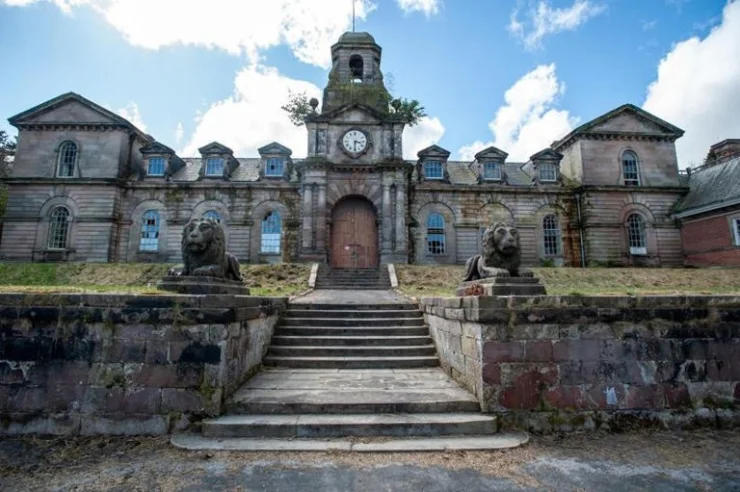
If you had £950,000 to spare and fancied owning a vast, unsettling — and, according to some, haunted — Welsh mansion, you narrowly missed the opportunity. In 2021, that sum would have secured Kinmel Hall, a once-magnificent Grade I listed estate set in the North Wales countryside.
Constructed in the 1870s for copper magnate Hugh Robert Hughes, the estate earned the nickname “the Welsh Versailles.” For decades it stood as a symbol of wealth and architectural ambition. Over time, however, a mixture of misfortune, financial strain and neglect led to its steady decline.
At its height, the mansion featured 365 windows, 12 entrances and 122 rooms spanning more than 80,000 square feet, ranking it among the largest private homes in Britain. Ornate ceilings, carved wood panelling and sweeping corridors adorned with imposing portraits once defined its interiors. The property even contained decorative wooden panels reportedly gifted by Queen Victoria after a visit — artefacts later stolen as the building deteriorated.
Kinmel Hall has stood empty since the early 2000s. Over the years it has served various roles, including a girls’ school, a wartime hospital, a Christian conference centre and a proposed hotel. A major fire in 1975 caused extensive structural damage, and despite sporadic restoration attempts, the building has never fully recovered. Today, visible fire scars, leaking roofs and shattered windows underscore its fragile state.
Conservationists warn that without urgent intervention, the hall risks irreversible collapse. After its 2021 sale to developer Chris Cryer, plans to fund restoration through temporary glamping pods sparked local opposition, prompting enforcement action. With restoration costs estimated at around £70 million, Kinmel Hall now faces an uncertain future — too historically significant to demolish, yet staggeringly expensive to restore.