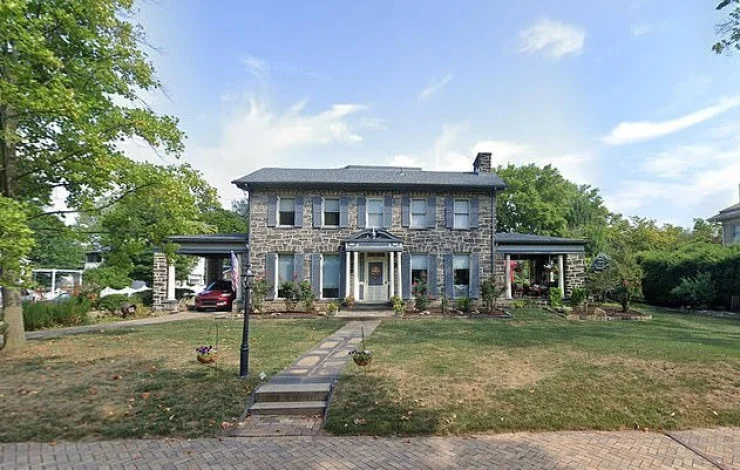
A Pennsylvania couple say the joy of moving into their dream home was shattered when they uncovered Nazi symbols embedded in the property’s basement flooring, a discovery that has since led to a prolonged legal battle over what sellers are required to disclose.
Daniel and Lynne Rae Wentworth bought the five-bedroom house in 2023 for $500,000, drawn to its stone design and leafy riverside setting in the borough of Beaver. The property had been owned for nearly five decades by an 85-year-old German immigrant, from whom the couple purchased the home.
Soon after moving in, the Wentworths discovered that the basement tiles formed shapes resembling a swastika and a Nazi eagle. They claim the symbols were concealed beneath rugs during their viewings and said they were “mortified” when they realised what lay underneath. According to court filings, the couple believe the imagery has made the home uninhabitable and unsellable.
Their lawsuit, which has wound its way through Pennsylvania’s courts for more than two years, has raised broader questions about whether offensive imagery can be considered a “material defect” in a property transaction. The Wentworths allege the former owner violated the Pennsylvania Real Estate Seller Disclosure Law by failing to mention the tiling, arguing they would never have bought the house had they known about it.
They estimate it would cost more than $30,000 to remove and replace the flooring. Their attorney, Daniel Stoner, said the couple had been left heartbroken. “This is just not something you’d ever expect to have to deal with,” he said, adding that the Wentworths could suffer economic harm if others assumed they were responsible for the symbols or aware of them when purchasing the home.
The seller has rejected the claims, arguing in court that he never lied and that the designs do not amount to a material defect. His lawyer, Albert A. Torrence, said “purely psychological stigmas do not constitute material defects of property” and insisted there was no legal duty to disclose the imagery.
Torrence acknowledged that his client had installed the symbols but said this did not reflect Nazi sympathies. He claimed the former owner, decades ago, had been reading about how the swastika was appropriated by the Nazi Party and included the design during a basement renovation as a form of protest. A rug was later placed over the tiles, and the matter was forgotten, he said.
Under Pennsylvania law, sellers must disclose issues such as structural damage, flooding or pest infestations, but hate symbols are not included. Both the Beaver County Court and, on appeal, the Pennsylvania Superior Court ruled in the seller’s favour, finding the tiling did not need to be disclosed.
While acknowledging the Wentworths’ outrage, judges concluded the law did not cover such circumstances. The couple have since decided not to appeal further and plan to remove the tiles once the legal process is complete.