Here’s a rewritten version at about 600 words, keeping the argument and tone but with fresh phrasing and smoother structure:
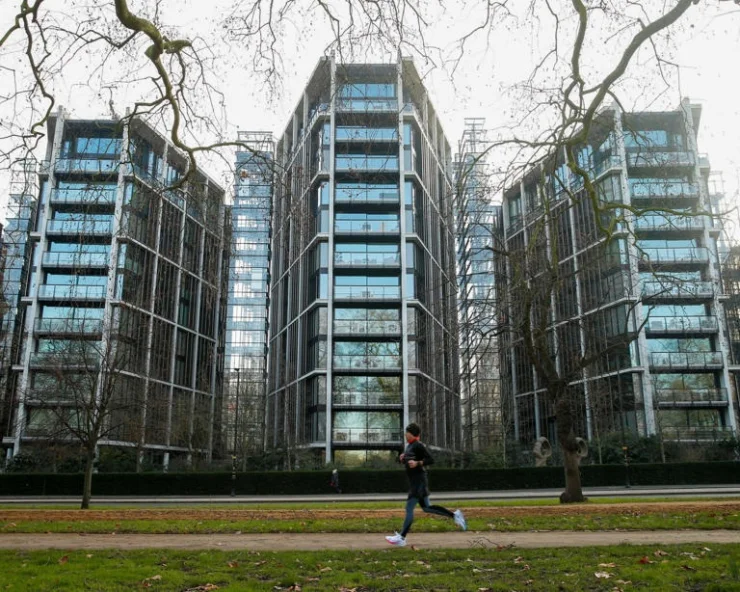
It turns out even Britain’s wealthiest homeowners are not immune from the country’s shoddy building culture. Last week, residents of One Hyde Park — among the most expensive flats in the UK — won a £35 million High Court case against the contractor responsible for their homes. The court ordered construction giant Laing O’Rourke to repair defective pipework discovered in 2014, just three years after the luxury development was completed.
At the opposite end of the housing market, the consequences of poor workmanship are far more widespread. Tens of thousands of families are dealing with damp and mould linked to flawed construction. An investigation by the National Audit Office last October found that 98% of external wall insulation installed under previous government retrofit schemes was fitted so badly it now requires repair or replacement.
Across the country, similar stories point to a growing crisis in build quality. New developments routinely suffer from basic defects. In Croydon, a nearly new 35-storey tower has become so plagued by leaks and mould that residents are being relocated while major remedial work takes place. Meanwhile, major housebuilder Barratt Redrow recently identified £248 million worth of defects across its sites.
From social housing to super-prime property, Britain appears unable to construct buildings without generating costly and sometimes dangerous mistakes. The question is no longer whether there is a problem, but how the UK’s building standards declined so sharply.
“We’re the dinosaurs of European construction,” says Barbara Jones, a builder with 45 years’ experience. “Colleagues from abroad laugh at us. They don’t think we value skill here. In Germany, being a tradesperson is respected. In Britain, it isn’t.”
Jones traces part of the problem to the erosion of vocational education. Britain’s Skills Training Agency once delivered rigorous instruction across trades, but it was privatised in 1990 despite warnings about sustainability. The company collapsed three years later, triggering a wider breakdown in construction training and leaving specialist roles largely unprotected by law.
In many countries, construction work is tightly regulated. In Germany, carpenters, roofers, plumbers, bricklayers and architects must all be trained and accredited before practising. In the UK, by contrast, almost anyone can present themselves as a carpenter or even carry out architectural functions regardless of qualifications.
Regulation alone has also failed to safeguard quality. Britain has extensive building rules, but inspectors cannot monitor every detail on site. Independent clerks of works, once common, used to visit sites frequently to check workmanship. That role has largely disappeared or is now filled by contractors themselves — effectively letting firms assess their own performance.
Architects once oversaw construction quality on the projects they designed. Today, “design and build” contracts often transfer control to builders, allowing them to alter specifications with limited oversight. Architects frequently criticise the model for encouraging cost-cutting, such as replacing quality materials with cheaper substitutes. Some argue this system played a role in the failures that contributed to the Grenfell Tower tragedy.
“There’s a culture of cutting costs everywhere, whether in social housing or luxury developments,” says architect Astrid Smitham, whose Barking housing scheme won a national award in 2023. She says firms increasingly replace hourly wages with piecework, paying workers per task rather than per hour, which rewards speed over care.
Materials have also changed. Older British buildings relied on flexible, breathable lime mortars that coped with moisture and movement. Modern construction uses rigid, cheaper cement that cracks and traps damp over time.
Ultimately, reversing the decline requires political will. Yet construction workers are barely represented in parliament. More than one in ten workers are in skilled trades, but almost no MPs have manual backgrounds.
Britain’s building crisis is not accidental. It reflects decades of deregulation, privatisation and profit-driven shortcuts replacing craft and oversight. Strip dignity from building, and the result is predictable: leaks, mould and massive repair bills for everyone — from council tenants to multimillionaires. Until those choices change, Britain will keep constructing problems faster than it can fix them.